
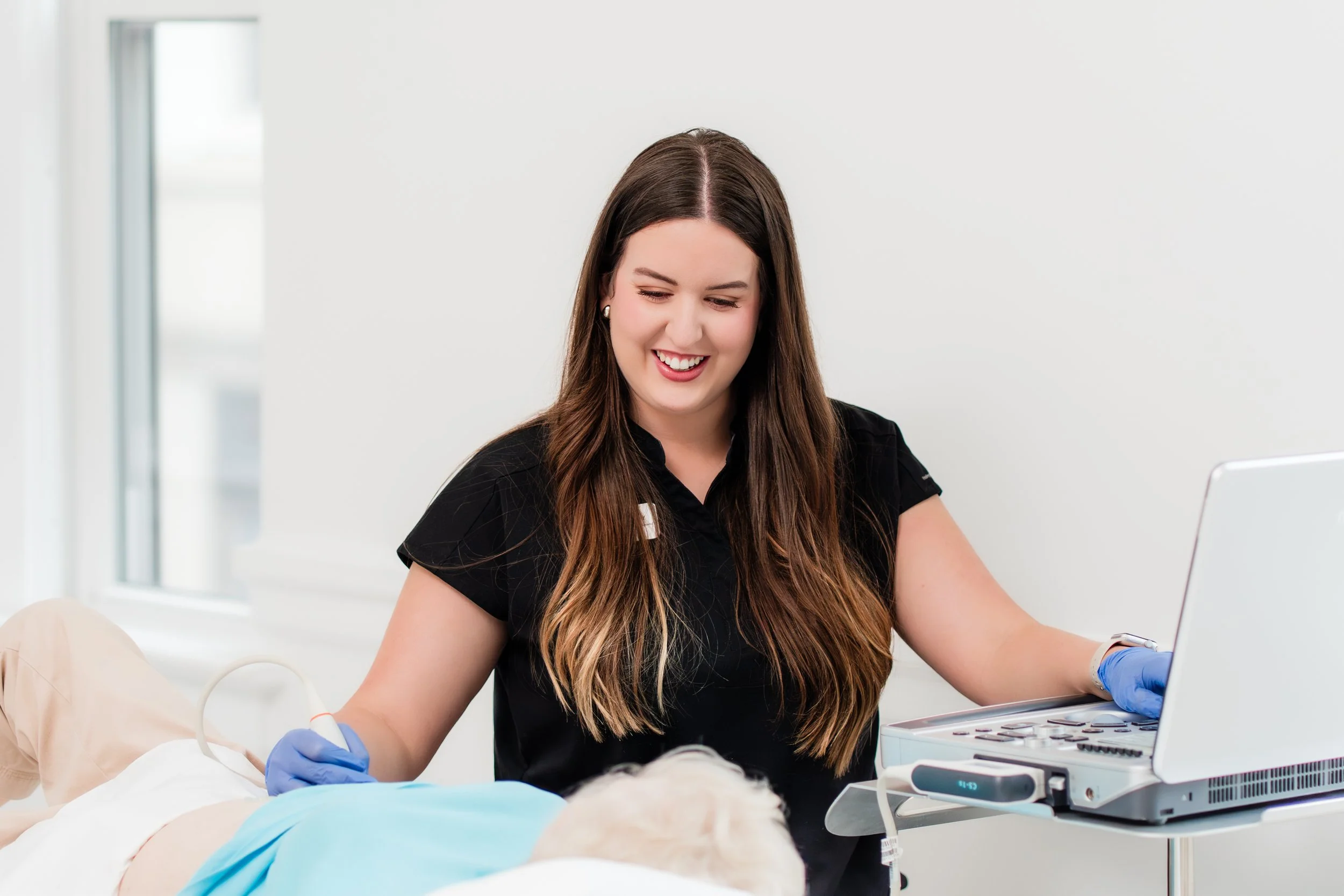
Every ultrasound image starts with technology—but a great ultrasound study starts with a skilled sonographer.
October is Medical Ultrasound Awareness Month, a time to recognize the professionals behind one of the most widely used imaging technologies in healthcare. While patients may see the ultrasound machine and the images it produces, there is much more happening behind the scenes.
Sonographers combine technical knowledge, anatomy, clinical experience, attention to detail, and patient care to produce diagnostic images that can help physicians make informed decisions about a patient's health.
At Innovative Ultrasound Solutions, we know firsthand just how much goes into that process.
What Does a Sonographer Actually Do?
A sonographer's job is much more than operating an ultrasound machine.
During an examination, a sonographer uses specialized equipment to capture images of structures inside the body. But getting those images requires knowledge of anatomy, pathology, ultrasound physics, and proper scanning techniques.
Sonographers must know what they are looking at, recognize when something may not appear as expected, adjust their technique when necessary, and obtain the appropriate images and measurements for the study.
They also work directly with patients, which means communication and compassion are an important part of the job.
A patient may be nervous about an examination or unsure of what to expect. A good sonographer knows how to explain the process, help the patient feel comfortable, and maintain professionalism throughout the appointment.
In other words, the technology is only one part of the equation.
The Skills Behind a Quality Ultrasound
Medical ultrasound requires a combination of technical and interpersonal skills.
Knowledge: Sonographers need a strong understanding of anatomy, physiology, pathology, and ultrasound technology.
Precision: Small adjustments in positioning, technique, or imaging can make a meaningful difference in the quality of a study.
Adaptability: Not every patient or examination is the same. Sonographers need to adjust to different body types, medical histories, clinical questions, and imaging challenges.
Communication: Sonographers work closely with patients, physicians, and other healthcare professionals. Clear communication helps keep the process moving smoothly and supports quality patient care.
Compassion: Ultrasound often happens during moments when patients may be worried, uncomfortable, or uncertain. The patient experience matters just as much as the technical side of the examination.
These skills come together every time a sonographer steps up to the machine.
Ultrasound Is Used for More Than You Might Think
When people hear "ultrasound," they often think about pregnancy. While obstetric ultrasound is certainly an important application, diagnostic ultrasound is used throughout many areas of healthcare.
Depending on the type of examination, ultrasound can be used to evaluate areas such as:
* Abdominal organs
* Thyroid and other superficial structures
* Carotid arteries
* Veins and arteries
* Musculoskeletal structures
* Testicular and scrotal anatomy
* Renal and urinary structures
* The heart through echocardiography
* Obstetric and gynecologic structures
Musculoskeletal ultrasound, for example, can be used to evaluate muscles, tendons, ligaments, joints, and other soft tissues. It can also provide real-time imaging that allows structures to be evaluated while they move.
That versatility is one of the reasons ultrasound remains such a valuable diagnostic imaging tool.
The Unique Role of a Mobile Sonographer
At Innovative Ultrasound Solutions, we take ultrasound one step further by bringing diagnostic imaging directly to healthcare practices and facilities throughout the Piedmont Triad.
For our sonographers, that means their work environment can look a little different from day to day.
Instead of staying in one facility, mobile sonographers travel to different offices and healthcare settings. They work with different providers, patients, equipment setups, and clinical environments while maintaining the same commitment to quality imaging and patient care.
That independence requires confidence, adaptability, and strong communication skills.
It also creates an opportunity for experienced sonographers to use their skills in a different kind of work environment.
Why Sonographers Matter
Ultrasound technology has continued to evolve, but the person operating the equipment remains an essential part of the imaging process.
A sonographer has to know how to use the technology effectively, but they also have to know how to obtain the right images, when to adjust their approach, and how to provide a positive patient experience along the way.
That's a lot of responsibility—and a lot of skill that deserves recognition.
Medical Ultrasound Awareness Month gives us an opportunity to celebrate the professionals who make diagnostic ultrasound possible every day.
To all of the sonographers who bring knowledge, precision, adaptability, and compassion to their work: thank you for everything you do.
Interested in a Career in Sonography?
For those considering a career as an ultrasound technologist, sonography offers an opportunity to combine healthcare, technology, anatomy, problem-solving, and patient interaction.
And for experienced sonographers looking for a different kind of work environment, mobile ultrasound can offer variety and independence while allowing you to continue doing what you do best: providing quality patient care through diagnostic imaging.
At Innovative Ultrasound Solutions, we're proud to support sonographers and the healthcare partners who rely on their expertise throughout the Piedmont Triad.
Learn more about Innovative Ultrasound Solutions and our current career opportunities here.